Showing posts with label 411. Show all posts

Reasons to Date a Dentist

By eHarmony Staff

You might have seen this eHarmony article floating around the web, making it's way into your facebook news feed or being re-tweeted on twitter. It's a compilation of 15 reasons to date someone is the #1 most awesome profession!


Here are the reasons:

If your cute-and-single dentist asks you out for dinner next Friday, say yes. Floss before you go. Why?

1. Sweet kisses. Expect impeccable dental hygiene and fresh breath.
2. Dentists are smart. Smart is sexy
3. Your parents will be impressed.
4. Not that money is everything…but most dentists make a great living.
5. Dentists work consistent, family-friendly hours. Unlike others in the medical field, most dentists have their evenings free.
6. Obvious perk: free checkups and immediate access to emergency dental work.
7. You’ll never be scared to visit the dentist again.
8. Because they often deal with anxiety-ridden patients, dentists are patient, reassuring and gentle.
9. Your significant other will look forward to date night. After a long day of talking to people with their mouths stuck wide open, chatting with someone who can move their jaw is a nice change of pace.
10. Dentistry is a noble profession: your date alleviates discomfort and make people’s lives better.
11. For the more ”adult-minded,” there are plenty of “drill” jokes to reference.
12. After spending the day in scrubs, your dentist date will “scrub up” well.
13. Not sure which toothpaste to buy? Your partner can help you make that decision, or even supply a free tube or two.
14. Dentists aren’t easily grossed out. After spending the day staring at infected gums and hygiene disasters, nothing you bring to the relationship health-wise will faze your date.
15. Dentists wash their hands – well. If you’re a germaphobe, a dentist is your dream date.

Some of these are atually true so ladies and gents, you may be someone's latest catch because of this article. Still can't believe this is serious advice. Is it?
Orginial Article: eHarmony Advice 

Oral Cancer Awareness!

It's April! and in the dent-world it is known to be Oral Cancer Awareness Month. Though oral cancer screenings are usually typically done during a routine dental visit/check-up, this is the month that the Oral Cancer Foundation (OCF) has dedicated to creating awareness of the prevalence of head and neck squamous cell carcinoma.

The Facts:
Did you know that head and neck squamous cell carcinoma is among the top ten most fatal cancers in in the US? It is estimated that close to 37,000 Americans will be diagnosed with Oral Cancer this year which will result in approximately 8000 deaths, killing roughly 1 person per hour!  It has a 5 year survival rate of 75% percent if caught early and a mere 20% if it goes undetected. The major risk factor is smoking and tobacco use. However, more and more cases have been found linked to the HPV virus. Needless to say, dentists are at the front line of defense when it comes to oral cancer, which is why the OCF is urging dentists to screen every patient and organize various events to create awareness of this deadly disease.

Recently at my school, the Student National Dental Association (SNDA) of which I am the president, conducted our annual Oral Cancer Walk. This walkathon is in line with the mission of the OCF,which is to create awareness of the incidence and prevalence of the disease as well as organize a screening event to have patients screened for the disease. A brief lecture was given to first and second year dental students on what oral cancer is, it's prevalence, incidence, mortality rate, etc., followed by live demonstrations. Patients were simultaneously being screened for oral cancer by third and fourth year dental students. After all the hard work, we took to the streets of Washington DC to create awareness.

A small group of students from Howard University College of Dentistry
creating awareness of oral cancer in Dupont Circle, Washington DC
Encourage your friends and family to get Screened! Stay away from cigarettes, tobacco and the HPV Virus!

Sources: ADA
              OCF
              Dental Practice

Another Day, Another Scandal

 Personal Protective Equipment (PPE) and Infection Control, Universal Precaution!!! I cannot begin to count the amount of times these topics are drilled into our heads on a daily basis. Dental students at my school are trained to practice and always take universal precautions, infection control and wear PPEs which is why I was appalled, alarmed and in total shock to hear of the oral surgeon in Tulsa, OK who has potentially exposed his patients to HIV and hepatitis due to "filthy conditions."


I am truly saddened by the alarming number of dentists who are popping up in the news these days. Generally , people are scared of the dentist. Just when we think we are making head way into eliminating that phobia, news like this surfaces and brings us right back to square one. Not good!

See article here

Another Extraction Gone Horribly Wrong

Just today while browsing news articles on the web, I happened upon a very unfortunate incident that occurred very recently in California. Marek Lapinski, a 24 year old male visited the Oral surgeon to have a third molar removed. This seemingly simple procedure ended the life of this young man. Apparently Mr. Lapinski woke up coughing mid procedure and was given the medication propofol. Shortly after receiving the medication Mr. Lapinski stopped breathing. Resucitation was unsuccessful and he was later pronounced dead.


While I, as a dental student who is currently treating patients, understand the many things that can go terribly wrong during dental procedures if all precautions are not taken, it breaks my heart every time there is unfortunate news surrounding dental treatment - and frankly, it is unacceptable! Not all the information surrounding this case is known to the public as of right now So I will pass up any judgement until further investigations and information becomes available.

Until then...

See article here

Oh, Lord Jesus it's a Toothache!

Sweet Brown, the lady from Oklahoma City who made the line "ain't nobody got time for that" popular, is at it again. Now she stars in an ad for Shortline Dental, a dental practice based in Tulsa, OK. Check it out below:


 At first watch my first impression was, you have got to be kidding me! but as I watched it again I saw a bigger picture. I saw a practice who knew who it's target audience (patient pool) was and marketed accordingly. I'm sure this practice is making bank! It's genius, and I must agree with Sweet, a toothache? ain't nobody got time for that!!

The Safety of Amalgam Fillings

On a segment of The Doctors TV show, an investigation of the safety of amalgam fillings was conducted. While the Food and Drug Administration (FDA) announces that the fillings are not associated with adverse health effects, an interview was done with one woman who believes that these fillings contributed to her multiple sclerosis. See below:

See the recent video here: The Doctors TV show - Are mercury fillings safe?

Follow-up video:


According to the ADA: 
Should your patients ask you about amalgam fillings, consider the following points:
  •  Amalgam has been used for generations to help save decayed teeth in more than 100 million Americans.
  •  Amalgam has been thoroughly studied, and no properly designed research studies have linked dental amalgam to serious health problems.
  •  (If appropriate) I have amalgam fillings in my mouth. 
  • An amalgam filling is just one of a variety of dental filling options available to you. Let's talk about what's best for you.
 Source: ADA, The Doctors

US News Best Jobs for 2013

And by best I mean occupations that offer a mosaic of employment opportunity, good salary, manageable work-life balance, and job security.

Guess who's #1?!


Yep! Sure feels good to know I chose a profession that has the right mix of components.

See the full list of best jobs here: Money- US News

More Changes To Come For The NBDE


Just when we thought they have made all the changes that they needed to for the National Board Dental Examination (NBDE), it seems the recent switch to pass/fail was just the beginning.


I recently wrote an article for ASDA's blog "Mouthing Off" speaking of yet another change that dental students will have to adjust to in the future. According to the Joint Commission on National Dental Examinations (JCNDE) an Integrated NBDE (INBDE) is slated for the year 2017. This new exam will integrate NBDE Parts 1 and 2 into one comprehensive exam. Why the need for this change? 
Here is an excerpt from my article on ASDA/s Mouthing Off on the matter:

...The traditional 2 part NBDE exam will soon be changed to one comprehensive exam termed the Integrated National Board Dental Examination (INBDE). This will integrate aspects of both the NBDE Part 1 and NBDE Part 2. Though it will not affect those of us already in dental school and the incoming class of 2016, there is talk that this may be implemented by the year 2017. The changes come about as a more effective way to evaluate candidates for licensure as it will take on a more clinically relevant approach. It is stated that the basic Science portion that is usually tested in the NBDE part 1 will remain as such but the content will be integrated into a clinical context.
You can find the rest of the article here:
Find out more about the new changes, re: INBDE here 
Another 'Mouthing Off' post here

Teeth found in Tumor of the Eye

According to The Sun, two fully formed teeth were found in a tumor of the eye of a 23 year old woman from India. This tumor, known as a teratoma (which are known to contain hair, tooth-like and bone-like structures), and are not uncommon but was surprising to doctors as it is extremely rare to find fully formed teeth embedded in the tumor.

Read more here.

2 Ways the “Paper Clip Dentist” Scandal Affects Dentist-Patient Relationships

A Guest Post from Robert Milton

Wow. If people weren’t already afraid of the dentist, they’re going to have a tough time now. Or rather, practicing and future dentists will have a harder time convincing patients they’re trustworthy thanks to the latest dental lawsuit making waves in the media.
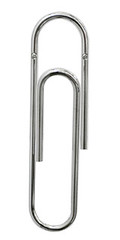
On Monday, Dr. Michael Clair of Massachusetts was sentenced to one year in jail because he used paper clips instead of stainless-steel posts for root canals and then fraudulently billed Medicaid the full price. One of the patients involved in this particular case, Joshua Almeida, suffered toothaches and eventually lost his tooth from the botched root canal.
What can we take away from all this?
I think there are a number of lessons to be learned from the “Paper Clip Dentist” scandal, but two things in particular stuck out to me.
Safety Over Cutting Corners
The paper clip post and core method for root canals may be familiar to some dental students. It’s not unheard of for a root canal project in a third year Restoration course to use a paper clip for the temporary core of a provisional crown. Even one of the most frequently cited textbooks on the subject, Fundamentals of Fixed Prosthodontics by Herb Schillingburg, DDS, includes this less than optimal material where you would expect a stainless-steel post to be used. However, it’s important to note that it is considered only for temporary use.
Clair acknowledges he used the common office supply because it was cheaper than the $50 a piece stainless-steel posts. He might have gotten away with it for the temporaries, but he kept them in permanently leaving unaware patients with structurally unsound teeth and vulnerable to infection.
It’s no secret that running a dental practice is expensive. Of course you’ll want to look for a way to cut costs when you’re dealing with massive student loan debt from dental school, keeping equipment up-to-date, and the everyday business expenses of rent, utilities, and payroll. But safety should always trump cutting corners financially. Granted, Clair may be suffering from some sort of mental issue that impairs judgment, but I believe his extreme case serves as a reminder not to cross ethical boundaries when under financial stress.
Easing Dental Fear
An estimated 75% of Americans are fearful of the dentist with up to 10% of those avoiding dental appointments all together. Much of the anxiety associated with dental work is a result of previous bad experiences whether it was a painful procedure or a poor relationship with a dentist. However, news stories such as this most recent lawsuit can horrify patients indirectly.
There’s a good chance that you’ll be faced with even more challenging dental patients than before. After all, root canals are already one of the most feared procedures and now they’ll shutter every time they reach for a paper clip at work. It may be time to boost your chair side manner in regards to this heightened anxiety.
Communication is everything. Keep your ears open and the conversation going with each patient. Some may not want to know what’s happening at all, but many relax when a full explanation of the procedure is given. Perhaps now would be a good time to start showing them the materials you’ll be using so they know you don’t shop at Office Depot for dental supplies.

Providing quality care and squashing fears make for a successful dentist. If you win them over while they’re in your chair, they’ll return frequently and brag about you in between appointments. As a bonus, you’ll get to feel all warm and fuzzy inside.
Does anything else strike a chord with you about the Paper Clip Dentist case?

Robert Milton writes for Austin Dental Center, an Austin dentist that’s dedicated to making patients feel comfortable while providing a wide range of services from mercury-free fillings to dental implants. You can find them at 2304 Hancock Drive #1, Austin, TX 78756 or call (512) 454-0414.

Reducing Fluoride Levels In Drinking Water?

The U.S has come very far in incorporating fluoride into the drinking water supplies making it part of the daily nutritional intake. This process has been credited for the decrease in the occurrence of tooth decay. On January 7, 2011 however an announcement was made by officials from the Department of Health and Human Services (HHS) and the Environmental Protection Agency (EPA) lowering the recommended intake of fluoride in water to 0.7 milligrams per liter, less than the current range of 0.7-1.2 mg/L. See related article here. Though it is said that the water fluoridation process has decreased the occurrence of tooth decay, it has also increased the occurrence of dental fluorosis in young children - a condition where enamel forming cells are damaged causing the tooth's enamel to become porous resulting in a mottled, white/brown appearance.

The proposed recommended intake is exactly what it is, a proposition. More research will have to be done to find out just how much fluoride we actually are supposed to be consuming via drinking water.
Am I the only one that thought this issue was totally resolved by the dental and scientific community?

Flossing Improves Memory, Who Knew?

I came across an interesting article online which correlates flossing to improved memory, who knew? According to WABC-TV researchers found that to prevent memory loss as you age, you must floss. The bacteria left behind in the mouth as a result of not flossing are the bacteria that contributes highly to gum disease. Gum disease triggers inflammation in the body which then causes stiffening of blood vessels. Stiffening of the blood vessels is what eventually leads to memory problems. Find article here.


See, dentists not only care for your teeth but your overall well-being. Next time your dentist says "don't forget to floss" take him/her seriously, he might just be trying to preserve your memory as well :)

Almighty H2O


Flavored waters like Propel Fit Water, SoBe Life Water nd Vitamin Water may do more than just quench your thirst:
Sipping on these trendy drinks over the course of a day can soften protective tooth enamel and increase sensitivity, say scientists involved in a trial at NYU College of Dentistry. The drinks' acid levels are to blame (not the sugar, as you might think). Brushing the teeth after drinking won't counter the effects, in fact, because softened enamel is more vulnerable to damage, it may weaken teeth even more.
So here's the trick: Wait at least 30 minutes to brush after drinking one of these drinks - that's about how long it takes the enamel to re-harden.
Another smart strategy: Quit the drinks! Make plain water your go-to drink.
(From Good Housekeeping Magazine)

The Specialties of Dentistry

Dentistry is a dynamic and rewarding career allowing for the improvement of one's overall health, well-being and appearance. It deals with the evaluation, diagnosis, treatment and prevention of diseases and injuries involving the teeth, oral cavity, maxillofacial area and any other related area and its effects on the body. Of course, a dentists job includes much more than just cleaning and drilling teeth. It incorporates many different surgical and non-surgical procedures and enhancements that essentially improves the quality of life. However, not every dentist does the same procedures. Some may specialize or focus on certain areas.

 
There are currently nine (9) specialties of the field of Dentistry

1. Dental Public Health - This is the science and art of preventing and controlling dental diseases and promoting dental health through organized community efforts. It is that form of dental practice which serves the community as a patient rather than the individual.

2. Endodontics - This specialty is concerned with the morphology, physiology and pathology of the human dental pulp and periradicular tissues.hi specialty is concerned with the morphology, physiology and pathology of the human dental pulp and periradicular tissues.

 3. Oral and Maxillofacial Pathology - This is the discipline of pathology that deals with the nature, identification, and management of diseases affecting the oral and maxillofacial regions. It is a science that investigates the causes, processes, and effects of these diseases.

4. Oral and Maxillofacial Surgery - This includes the diagnosis, surgical and adjunctive treatment of diseases, injuries and defects involving both the functional and esthetic aspects of the hard and soft tissues of the oral and maxillofacial region.

5. Oral and Maxillofacial Radiology - this is the discipline of radiology concerned with the production and interpretation of images and data produced by all modalities of radiant energy that are used for the diagnosis and management of diseases, disorders and conditions of the oral and maxillofacial region.

6. Orthodontics and Dentofacial OrthopedicsThis includes the diagnosis, prevention, interception, and correction of malocclusion, as well as neuromuscular and skeletal abnormalities of the developing or mature orofacial structures.

7. Pediatric Dentistry (formerly known as Pedodontics) - This is an age-defined specialty that provides both primary and comprehensive preventive and therapeutic oral health care for infants and children through adolescence, including those with special health care needs.

8. Periodontics - This encompasses the prevention, diagnosis and treatment of diseases of the supporting and surrounding tissues of the teeth or their substitutes and the maintenance of the health, function and esthetics of these structures and tissues.

9. Prosthodontics - This pertains to the diagnosis, treatment planning, rehabilitation and maintenance of the oral function, comfort, appearance and health of patients with clinical conditions associated with missing or deficient teeth and/or oral and maxillofacial tissues using biocompatible substitutes.

Source: ADA.org


Related Posts with Thumbnails